



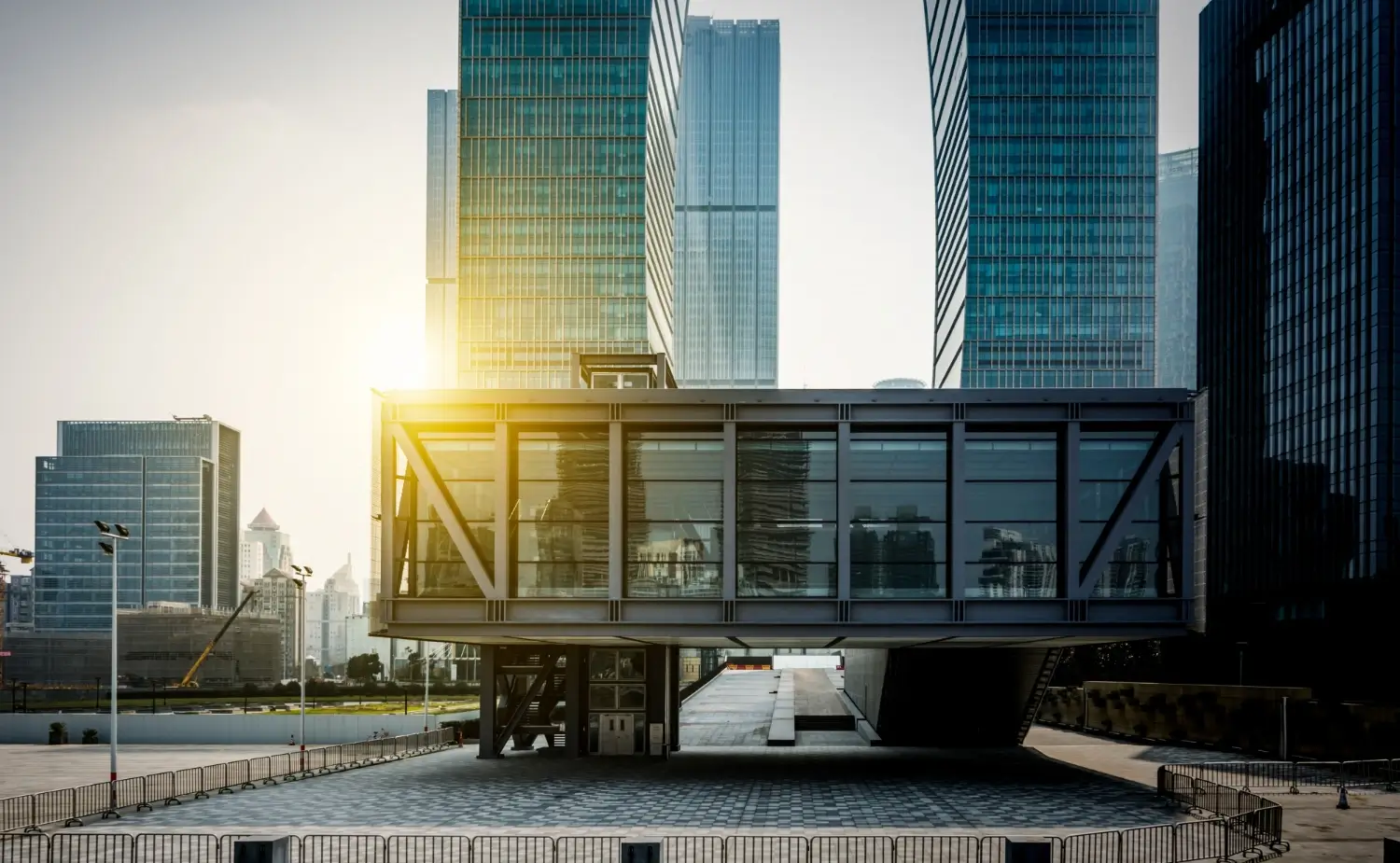
Commercial infrastructure refers to buildings and physical structures developed to support business, trade, and service-based activities. These include office complexes, retail outlets, shopping malls, hotels, restaurants, warehouses, IT parks, and mixed-use developments. Designed to handle high footfall, optimize workflow, and ensure long-term functionality, commercial spaces are built with a focus on durability, accessibility, and aesthetic value.
Moreover, commercial spaces are often designed to reflect the brand identity and professionalism of the businesses they house. Whether it’s a high-rise business center or a local retail space, each project is executed with precision, balancing structural integrity, visual appeal, and adaptability to future expansion or renovation needs.
A well-planned commercial infrastructure not only enhances business performance but also contributes significantly to urban development. It enables smooth business operations, attracts customers or clients, and boosts economic activity within a region. Compliance with safety standards, fire systems, elevator access, HVAC systems, and energy-efficient lighting are all integral components of modern commercial buildings.
