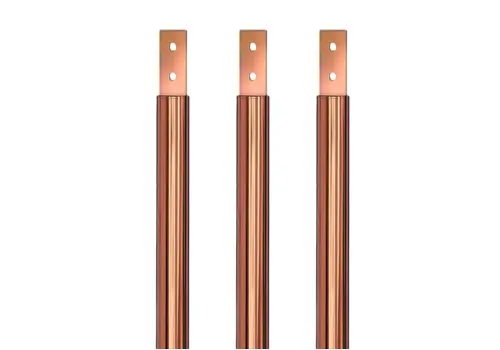



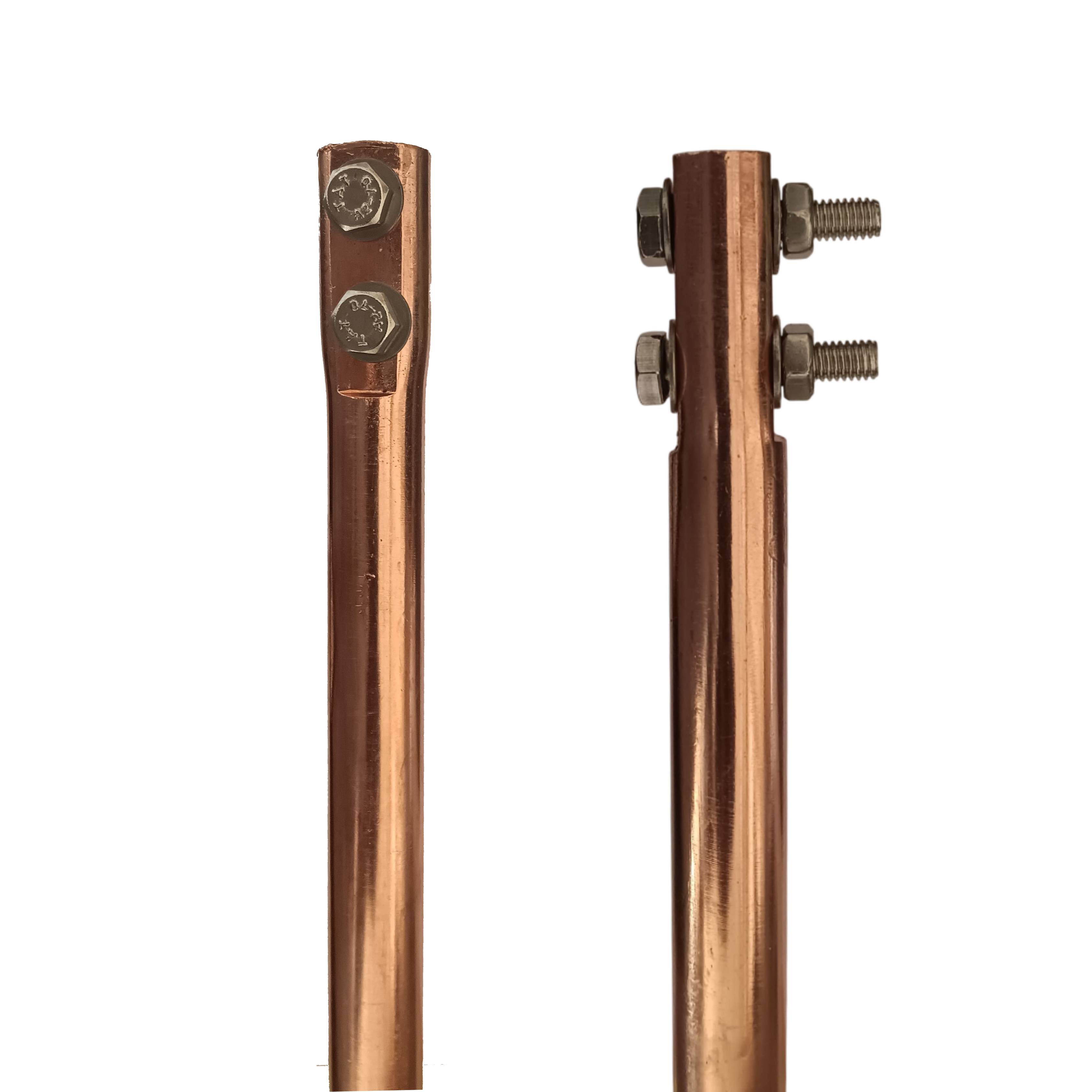


A Copper Bonded Earthing Rod is a high-performance earth electrode made by bonding a layer of copper onto a high-tensile steel rod. It is designed to safely conduct electrical fault currents and lightning surges into the ground. These rods are widely used in grounding systems for residential, commercial, industrial, and critical infrastructure applications.
They provide a long-lasting, corrosion-resistant, and low-resistance path to earth, making them ideal for demanding environments.
Protect human life and property from electrical faults.
Safely discharge lightning and fault currents into the ground.
Ensure electrical system stability and prevent damage to equipment.
Minimize resistance to earth for better system performance.
Comply with safety standards in electrical installations.
Core Material: High-strength, low-carbon steel (for rigidity and durability).
Copper Bonding: A molecularly bonded copper layer (typically 100 to 300 microns thick).
Length: Common lengths are 1 meter to 3 meters.
Diameter: Typically ranges from 14.2 mm to 50 mm.
Threaded Ends: Allow multiple rods to be connected using couplers for deeper installations.
Excellent Conductivity: The copper surface ensures efficient current flow.
Corrosion Resistance: Copper bonding prevents rusting and degradation.
High Tensile Strength: Steel core provides strength for deep driving into the ground.
Long Lifespan: Typically lasts 30 to 40 years in most soil types.
Compact Design: Easy to transport and install, even in confined areas.
Soil Preparation: Determine soil resistivity and select installation location.
Driving the Rod: Use a hammer, rod driver, or power tool to drive the rod vertically into the ground.
Multiple Rods (if needed): Use couplers to connect and extend rods for deeper grounding.
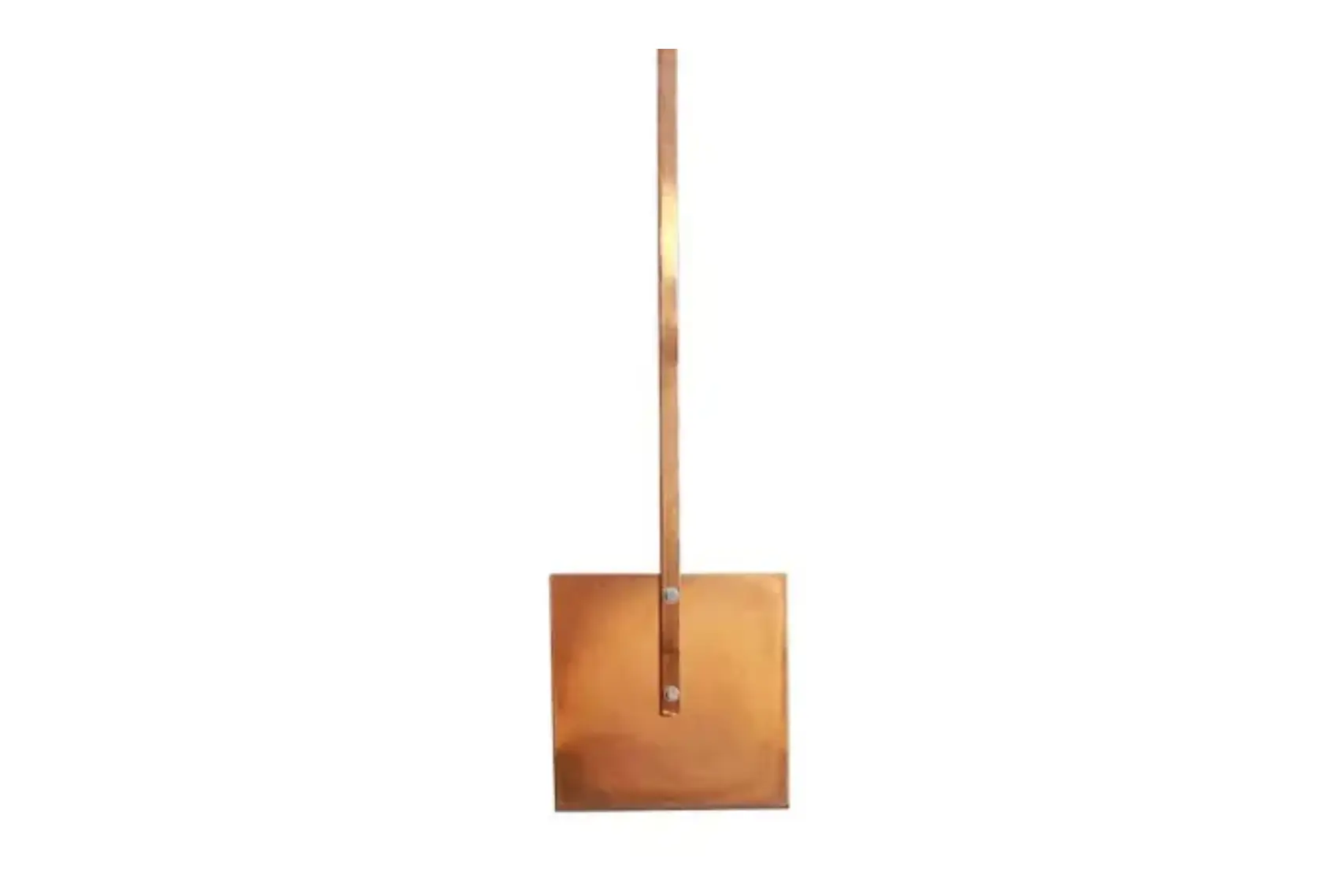
Connection: Connect the top of the rod to the main earthing system using a copper strip, earth clamp, or conductor.
Testing: Measure earth resistance to ensure it meets design requirements.
Cost-effective alternative to solid copper rods
High corrosion resistance in all soil types, including acidic and saline
Easy to install, especially in rocky or compact soils
Strong mechanical durability—does not bend or break easily
Compatible with a wide range of grounding accessories and clamps
Electrical substations and transmission lines
Communication towers and telecom networks
Industrial plants and factories
Hospitals, schools, and data centers
Residential and commercial buildings
Solar and wind energy systems
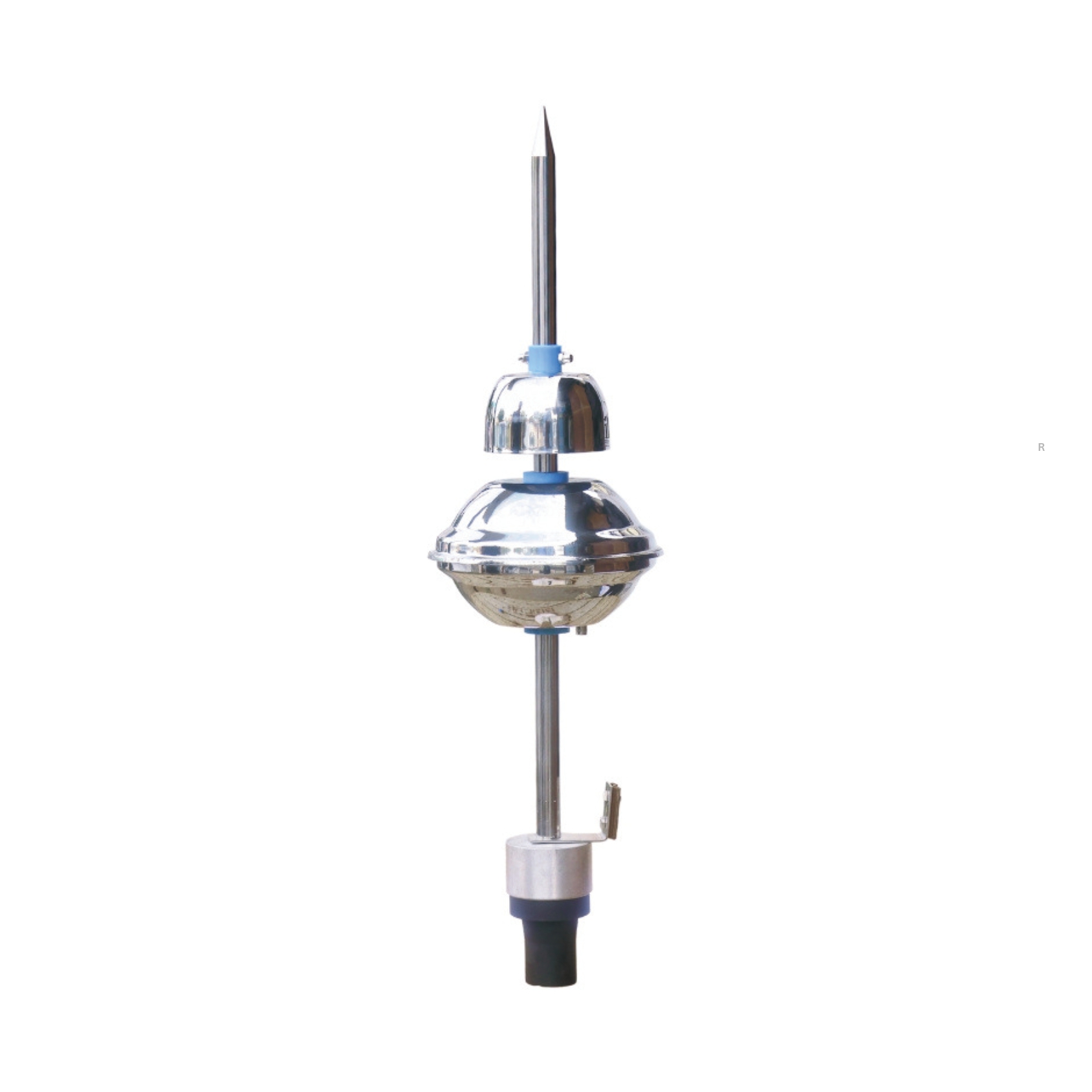
Lightning protection systems
UL 467 – Grounding and bonding equipment
IEC 62561 – Components for lightning protection
IEEE 80 – Grounding for substations
IS 3043 – Code of practice for earthing (India)