



1. Moisture Retention:
Mineral compounds keep consistent moisture around the electrode.
Prevents drying of soil (especially in hot/dry areas).
2. Low Resistance Path:
Provides stable, low resistance between electrode and soil.
Improves fault current dissipation.
3. Corrosion Protection:
Creates a protective layer around the electrode.
Slows down rusting of GI/copper rods.
4. Eco-Friendly:
Non-toxic, safe for soil and groundwater.
Long-lasting compared to traditional salt + charcoal.
2. Low Resistance Path:
Provides stable, low resistance between electrode and soil.
Improves fault current dissipation.
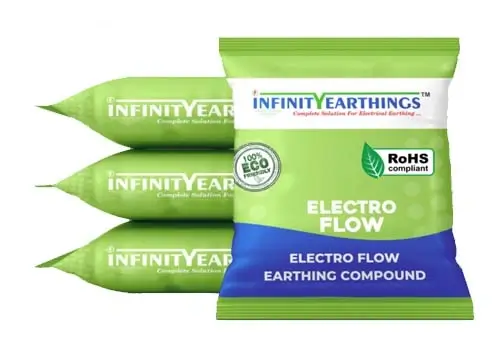
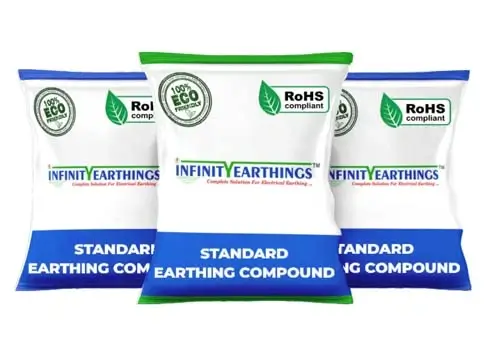
It is a Backfill Compound (BFC) used in chemical earthing.
It contains Conductive Carbon, Graphite Powder, and Mineral Additives.
It is filled around the electrode inside the pit.
1. Low Resistance Path
Maintains low resistance between the electrode and soil.
Helps dissipate fault current quickly and safely.
2. Moisture Retention
Retains moisture in the soil for a long time.
Keeps the earthing system stable even in dry/rocky soil.
3. Electrode Protection
Forms a protective layer around the electrode.
Reduces corrosion (rusting) and increases electrode life span.
4. High Conductivity
Due to carbon and graphite, it provides higher conductivity.
Ensures stable performance even under heavy electrical load.
5. Maintenance-Free System
No need for repeated salt and charcoal filling.
Once installed, it remains effective for many years.
1. Mixing the Compound
Backfill Earthing Compound, mineral-based, or carbon-based compound is used.
Add water and make it into a paste-like mixture.
2. Placing in the Pit
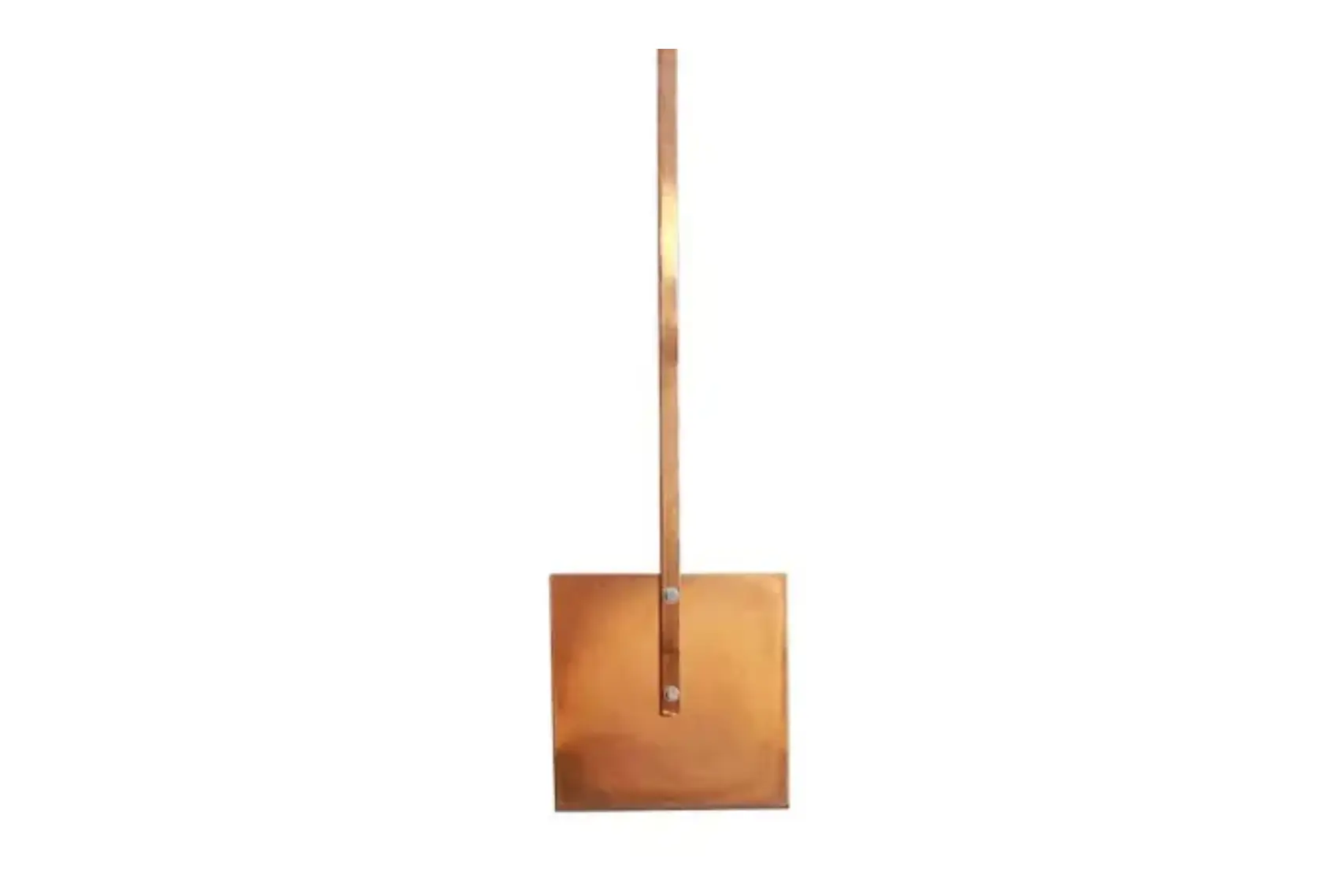
Before placing the Earthing Electrode (Pipe, Rod, or Plate), pour some compound mixture at the bottom of the pit.
Then place the electrode firmly inside the pit.
3. Filling Around the Electrode
Fill the compound mixture all around the electrode completely.
Cover the top with some soil and water, and compact it tightly.
This Method Ensures
Low resistance for the electrode.
Longer life of the earthing system.
Stable conductivity over time.
Maintains low earth resistance in all seasons
Works well in poor soil conditions (rocky, sandy, dry)
Reduces maintenance needs compared to salt/charcoal method
Increases electrode life by preventing corrosion
Improves system safety and performance